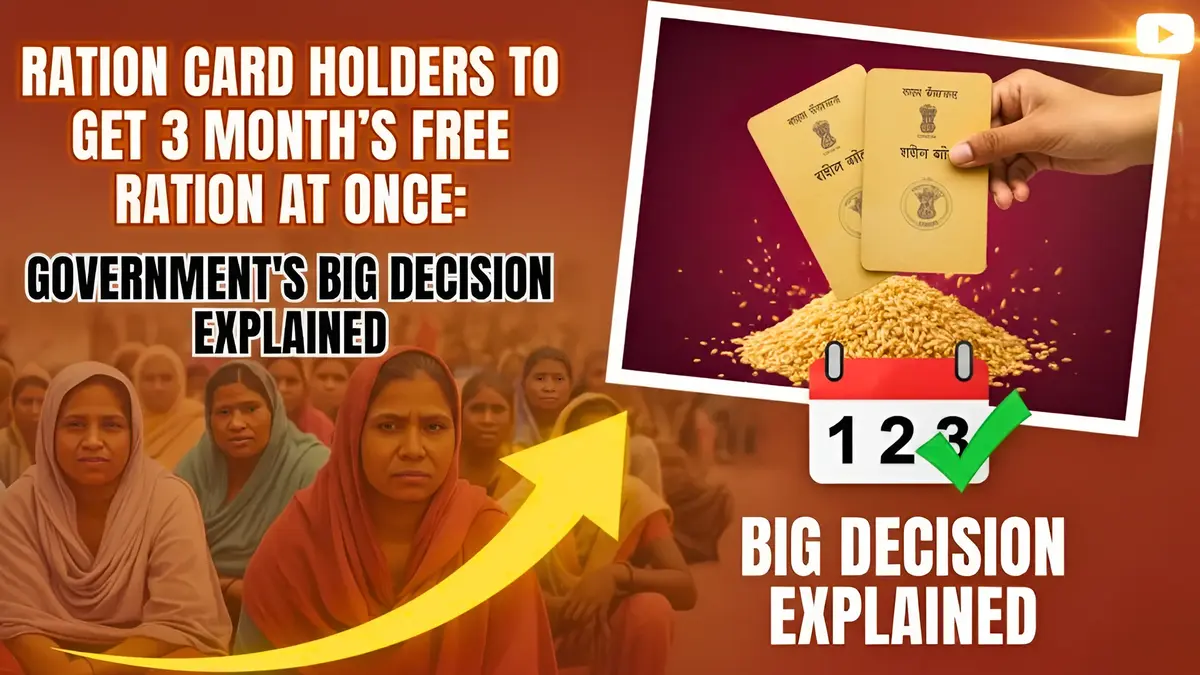
New Ration Card Rule 2026: Ration card holders across India are set to experience a major shift in how subsidized food grains are distributed in 2026. The government has introduced a new rule allowing eligible families to collect three months’ ration in a single visit. This step is aimed at improving convenience, reducing overcrowding at fair price shops, and ensuring smoother distribution under the Public Distribution System. For millions of households that depend on subsidized food, this update brings practical and timely relief.
Three Months Ration In One Go
The highlight of the 2026 ration card update is the option to receive three months’ food grains together instead of visiting the shop every month. Beneficiaries can now collect their full quarterly quota in a single trip. This means fewer queues, less travel cost, and reduced waiting time. For working families and elderly citizens, this change simplifies life and cuts down the stress of remembering monthly collection dates.
Public Distribution System Gets Smarter
The Public Distribution System has been gradually modernized with digital tracking and Aadhaar linkage, and this new rule strengthens that system further. Biometric authentication will continue to ensure transparency and prevent duplication. By allowing bulk collection, authorities aim to streamline supply chain management and improve efficiency at ration shops. It also helps reduce overcrowding during peak days, making the entire process smoother and more organized.
Who Is Eligible For The Benefit
The three-month ration facility applies to eligible households holding valid ration cards under government schemes. Beneficiaries must ensure their ration card is Aadhaar-linked and active. In most states, families under priority or Antyodaya categories can opt for this benefit. However, local authorities may issue specific guidelines, so card holders should check with their fair price shop dealer or district supply office for exact eligibility conditions.
Essential Documents And Process
To collect the quarterly ration, beneficiaries need to complete biometric verification at the fair price shop. Aadhaar authentication remains compulsory to maintain transparency. Card holders may need to inform the shopkeeper in advance about choosing the three-month option. Once verified, they will receive the combined quota of rice, wheat, or other allotted grains. Keeping the ration card updated and linked with Aadhaar is crucial for a smooth process.
Major Benefits For Migrant Workers
Migrant laborers often miss their monthly ration due to travel or work commitments. The new rule offers flexibility by allowing them to collect supplies before relocating for employment. This ensures food security for their families even if they are away for weeks or months. The quarterly collection system is expected to particularly benefit rural households and workers who depend on seasonal employment opportunities.
Impact On Food Security Nationwide
The government aims to strengthen food security while making the distribution system more user-friendly. By reducing frequent visits, the new rule minimizes crowd management challenges and ensures better stock planning. It can also help ration shop owners manage inventory more effectively. With improved monitoring systems already in place, the risk of misuse remains controlled while beneficiaries receive greater convenience.
Final Word On The New Rule
The 2026 ration card rule allowing three months’ food supplies in one visit marks a practical and citizen-focused reform. It saves time, reduces travel expenses, and supports working families, elderly citizens, and migrant workers. While beneficiaries must complete proper verification and follow local guidelines, the overall change is expected to simplify ration collection significantly. For millions of households relying on subsidized food grains, this update brings welcome relief and improved accessibility.
